
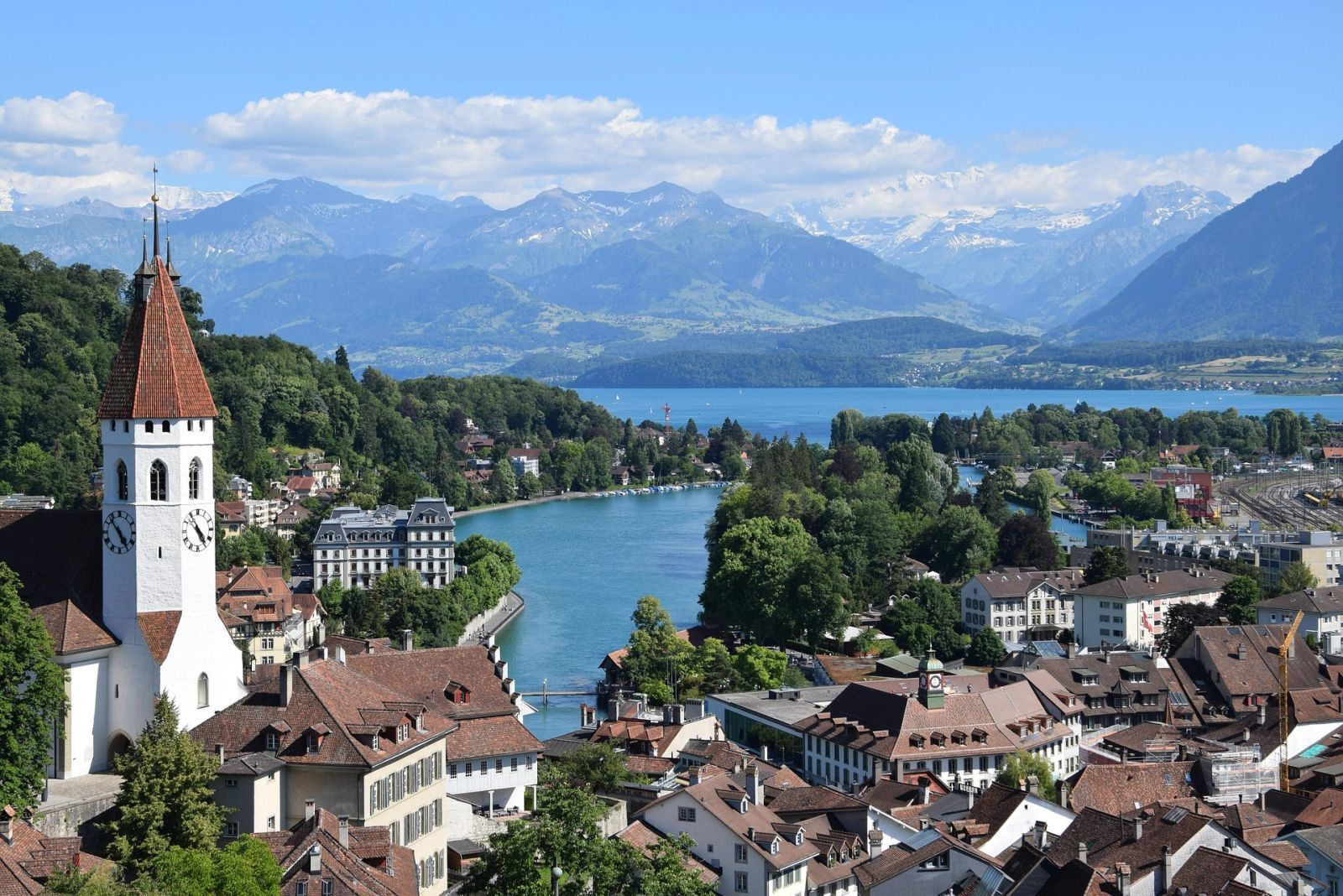
Four white towers watching the Aare slide out of the lake.
Bern region Thun
Thun
Plan
Plan your trip
A handcrafted itinerary for Thun.
SleepFind your stay
A short, curated list. None of them a chain.
GuidesFollow a route
Hand-curated, walked before written.
Thun lies at the western tip of Lake Thun in the canton of Bern, twenty minutes by train from the capital. The Aare river flows out of the lake here and cuts through the old town under a string of bridges before continuing north.
Above the rooftops, on a hill that has been fortified since the Early Middle Ages, stands Thun Castle. Duke Berthold V of Zähringen built the keep between 1180 and 1190; its Knights' Hall, 14 metres high, ranks among the best-preserved halls of its kind in Switzerland. From Thun station, the walk up through the old town and the castle stairs takes about fifteen minutes.
Thun is the gateway to the Bernese Oberland, the point where the lowlands give way to the first Alpine slopes.
Things worth slowing down for
A few of our favourite spots in Thun.
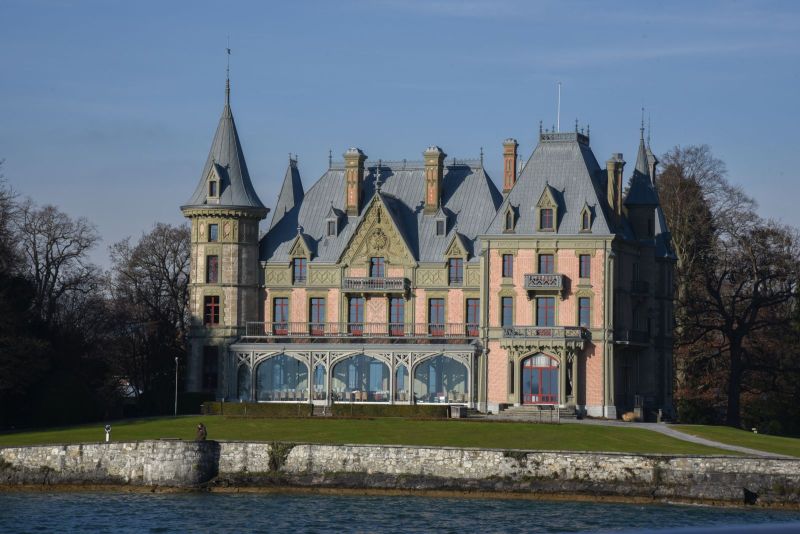
A summer house dressed as a castle, with a park to match its ambition.
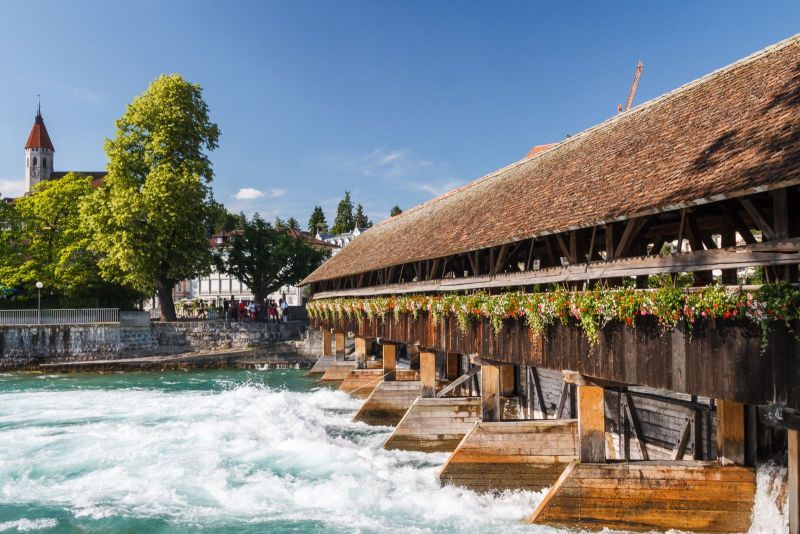
Watch surfers ride a standing wave in the middle of town, created by a wooden gate from 1818.

An octagonal tower has watched over Thun's rooftops since 1330.
What makes Thun slow travel perfect
Thun is a city built around water and elevation, and both shape how it is experienced. The old town's main street, Obere Hauptgasse, runs on two levels: shops sit below street height with their roofs forming a raised pedestrian walkway above, a layout found nowhere else in the country. Walkers move along the top while traffic passes underneath, and the arrangement turns an ordinary errand into something worth slowing down for.
The castle adds the second layer. Its four corner towers rise over the city, the lake and the first ridges of the Alps, and the climb from the station rewards anyone willing to take the stairs rather than skip the old town on the way up. Eight hundred years of Bernese history sit inside those walls, from the Zähringen dukes to the Kyburg family who inherited the castle in 1218.
Then there is the water. The Aare runs so clear through the city that it draws swimmers in summer, and Lake Thun stretches east toward Interlaken and the Jungfrau region, its paddle steamer still running on the warmer months. A boat leaving Thun's pier moves at exactly the pace the city already keeps: unhurried, precise about where it's going.
Stay one night anywhere in the region and the PanoramaCard Thunersee comes with it, covering local buses and trimming the cost of the lake boats, the mountain railways and the St. Beatus Caves.