Central Switzerland Andermatt
Andermatt
Plan your trip
A handcrafted itinerary for Andermatt.
SleepFind your stay
A short, curated list. None of them a chain.
GuidesFollow a route
Hand-curated, walked before written.
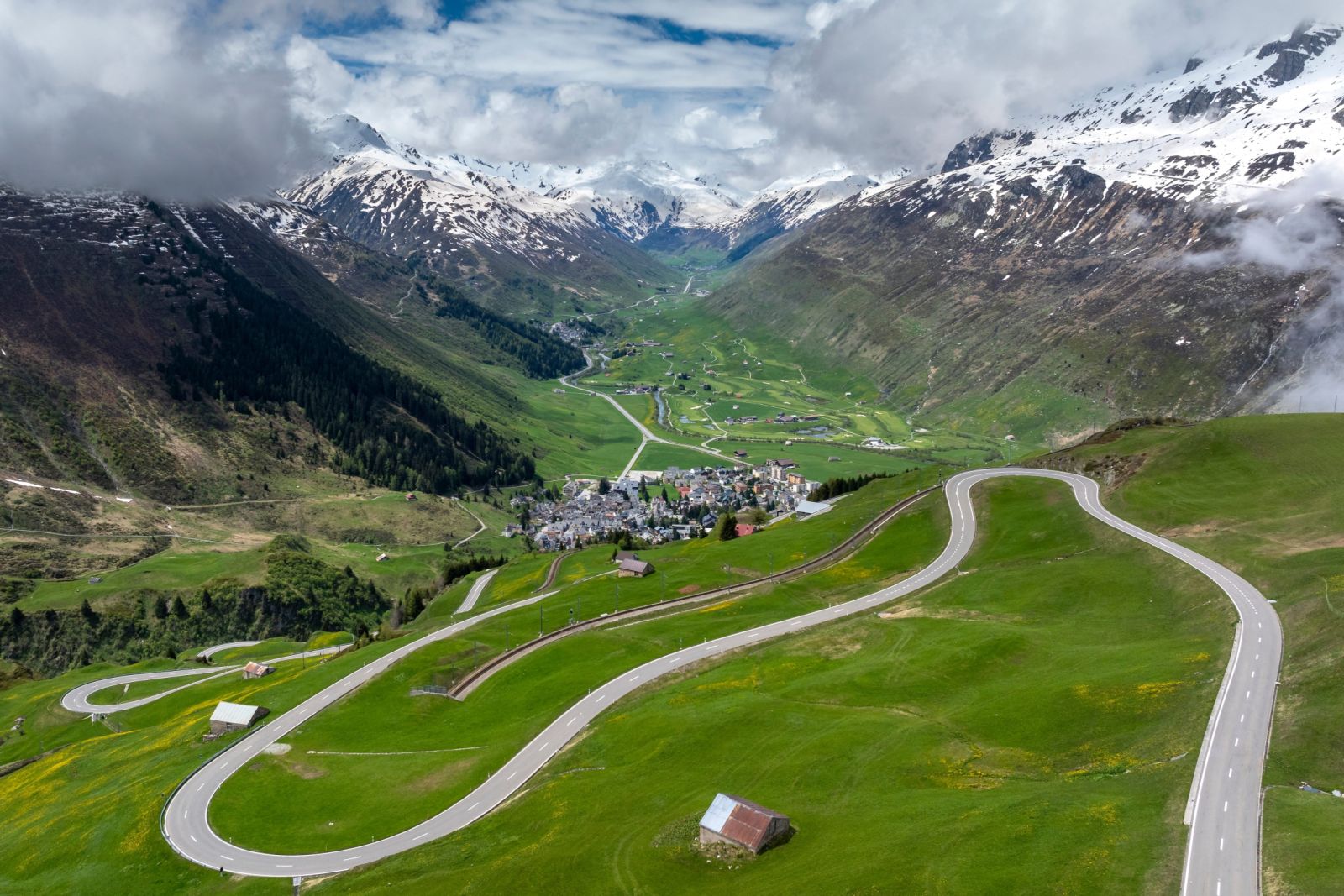
Andermatt lies at 1,437 metres in the Urseren Valley, in the south of the canton of Uri, where the Gotthard, Oberalp and Furka passes meet. For centuries the village existed because of this position: the only stopover on one of the few routes across the central Alps, hemmed in by granite walls on every side. The Reuss river runs through the valley floor and drops north through the Schöllenen Gorge, where the Devil's Bridge has spanned the water since the 13th century.
Today, the Furka-Oberalp railway and the Glacier Express both stop here, on the line between Zermatt and St. Moritz. Since 2013, a new district called Andermatt Reuss has grown beside the old village, its stone buildings and covered arcades built low, in keeping with the original settlement. Around 1,500 people live here year-round; the number climbs each winter, when the Gemsstock's slopes and the wider Andermatt-Sedrun ski area reopen above the rooftops.
What makes Andermatt slow travel perfect
Andermatt is a place that existed long before anyone thought to make it comfortable. For centuries this was simply the last stop before the climb: travellers rested here before the Gotthard, the Furka or the Oberalp took them into the next canton, and left again as soon as the weather allowed. That transience still shows in the shape of the village, gathered tight against the cold, facing inward rather than out toward any view.
The reason the village exists at all lies just north of it, in the Schöllenen Gorge. The Reuss cuts through granite so steep that the valley beyond stayed cut off until the first wooden bridge went up around 1230. What's known today as the Devil's Bridge has been rebuilt several times since, most recently in the 1950s, but it still crosses the same narrow gap, the river dropping hard beneath it.
Above the gorge, the valley widens and softens. Walk the Vier-Quellen-Weg, the Four Springs Trail, and within a few hours four rivers can be met near their source: the Reuss, the Rhine, the Rhône and the Ticino, each one eventually reaching a different sea. In winter the same ridgelines belong to skiers. The Gemsstock climbs to nearly 3,000 metres, and the connected pistes now run without interruption into Sedrun and Disentis, over the cantonal border in Graubünden.
New hotels and a pedestrianised shopping street have arrived over the past two decades, part of a redevelopment that has changed how Andermatt looks from a distance. Closer up, the old village, its patrician houses and narrow lanes, has not moved. Neither have the mountains around it.