Basel
Plan your trip
A handcrafted itinerary for Basel.
SleepFind your stay
A short, curated list. None of them a chain.
GuidesFollow a route
Hand-curated, walked before written.
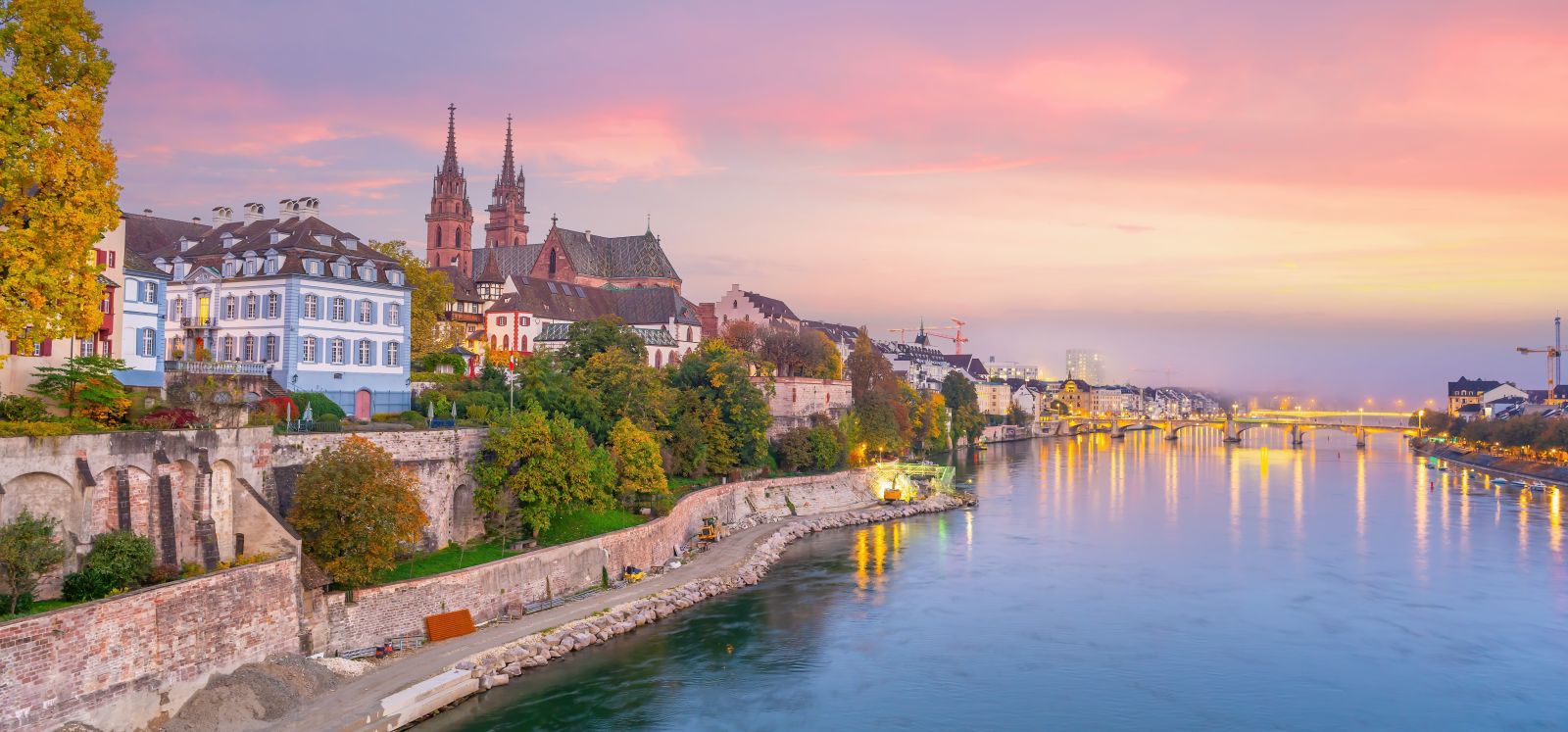
Basel lies in the northwest corner of Switzerland, at the point where the borders of Switzerland, Germany and France converge. The Rhine cuts the city in two, Grossbasel on one bank and Kleinbasel on the other, connected by the Mittlere Brücke, one of the oldest bridges over the river.
The old town holds more than 200 fountains and narrow medieval alleys that open onto the Marktplatz, where the 500-year-old Rathaus stands in red and gold. Basel Münster rises above the Rhine with its twin towers and patterned roof tiles, its crypt holding the tomb of Erasmus of Rotterdam. The city carries more museums per capita than anywhere else in Switzerland, and each June, Art Basel turns it into one of the art world's central meeting points.
What makes Basel slow travel perfect
Basel is a city that rewards walking without a plan. The old town is compact enough to cross on foot in twenty minutes, but every alley holds a fountain, a doorway, or a view that asks for a pause. From the Pfalz terrace behind the Münster, the Rhine curves past rooftops toward the exact point where three countries meet, a detail most visitors miss because they never stop to look.
The Rhine itself sets the rhythm of the city. In summer, Baslers finish work, seal their clothes in a Wickelfisch dry bag, and float downstream with the current, climbing out wherever the mood takes them. It is not a tourist activity staged for visitors. It is how the city cools off, and anyone can join.
Basel's art collections go deeper than a single afternoon allows. The Kunstmuseum holds work spanning seven centuries, while the Fondation Beyeler and Museum Tinguely offer a different, more contemporary register. Architecture fans find their own version of the same density: the Roche Towers and Messe Basel, both by Herzog & de Meuron, sit within walking distance of medieval stone. Basel does not separate its eras. It lets them stand next to each other, and leaves the connecting to whoever is paying attention.