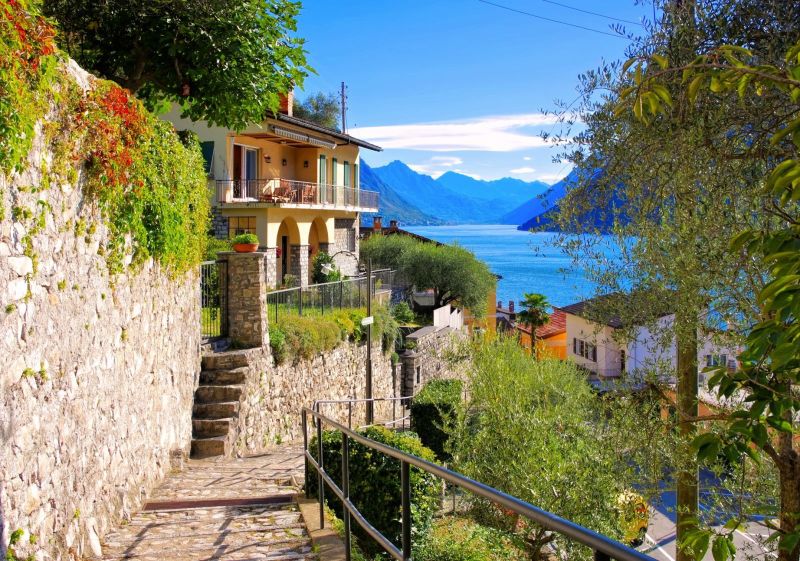
Old terraces of olive trees, planted back after the frost that took them.
Gandria
A village with no road in, held between water and mountain.
Gandria sits on the northern shore of Lake Lugano, the last Swiss settlement before the Italian border. No road reaches the centre. Cars stop above the village; everything else is stairs, narrow lanes, and houses stacked against the slope of Monte Brè. Until 1936 the only way in was by boat or footpath, and the village lived off what it had: olive groves, vineyards, silk. Some facades still carry frescoes from the 16th and 17th centuries.
The boat from Lugano takes about twenty five minutes and stops directly at the small pier. From there, an hour's walk along the lakeside path leads to the Cantine di Gandria, old wine cellars turned into grotti that opens only in the warm months, and to the Swiss Customs Museum, which traces a smuggling history the mountains across the water still hint at.
A separate path, The Sentiero dell'Olivo, climbs onto the terraces above the shore toward Castagnola, tracing centuries of olive cultivation on these south-facing slopes.
More in Lugano
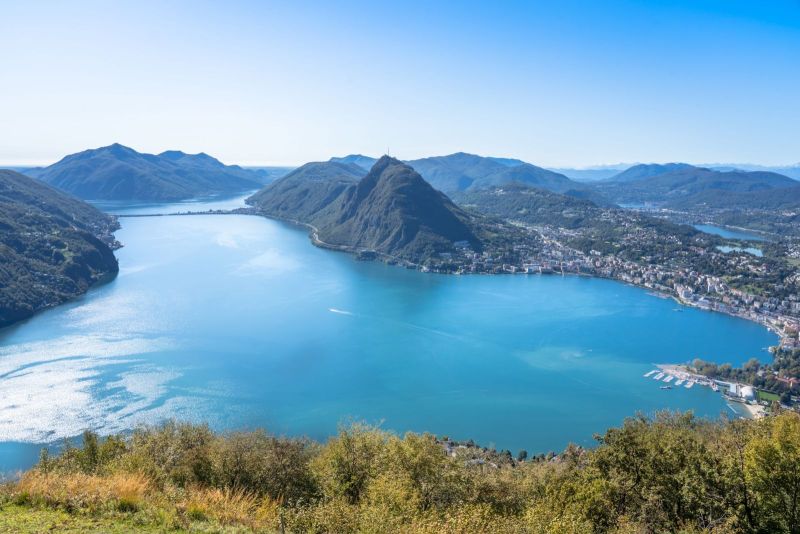
A red funicular climbs through chestnut woods to a summit where the lake opens in every direction.
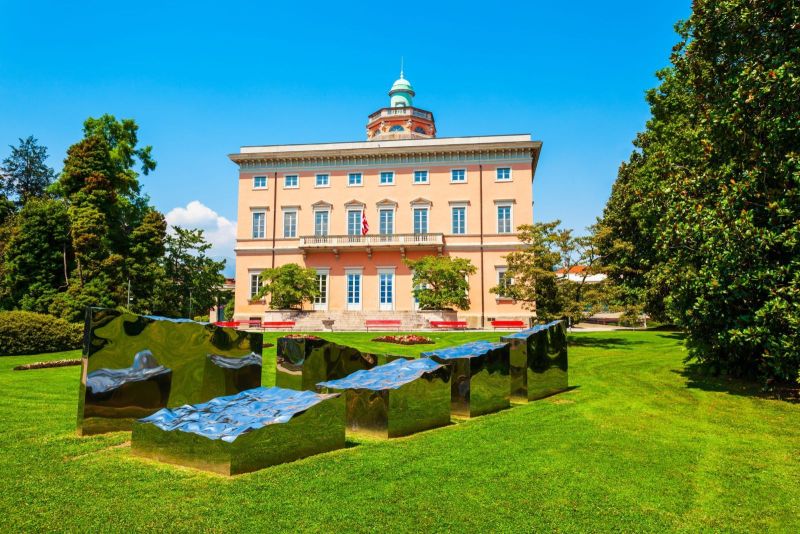
Lake water reaches the promenade edge while century-old plane trees hold the shade.
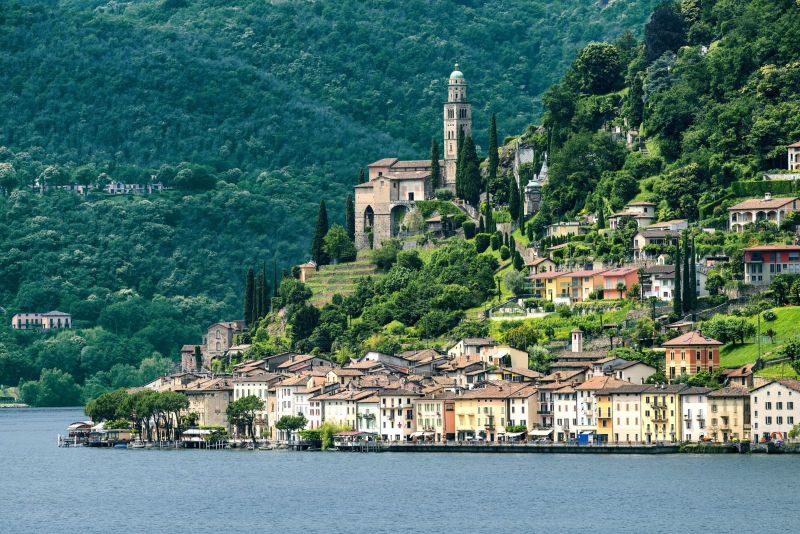
Voted Switzerland's most beautiful village. The boat ride there is half the magic.