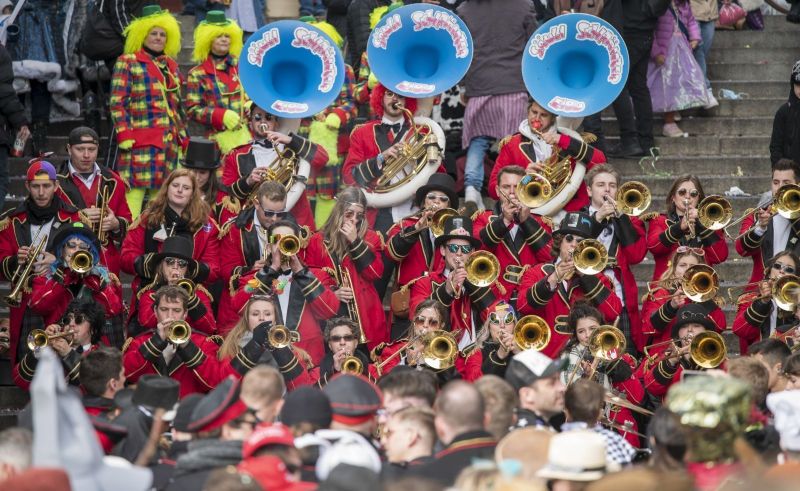
Brass bands echo off medieval facades at five in the morning, and the city does not sleep until Ash Wednesday.
Château Gütsch
A castle above the rooftops, reached by funicular through the trees.
go back
Food & drinks
 Koen's favourite
Koen's favourite
The Gütsch hill has watched over Lucerne since 1590, when a defensive tower marked the westernmost point of the city's fortifications. The castle standing there now dates to 1901, rebuilt after a fire by architect Emil Vogt in the manner of Neuschwanstein — which explains the towers and the pointed roofs visible from the old town below.
A funicular, first built in 1881, connects the hotel to street level in under two minutes. The ride is brief enough to feel almost private.
From the terrace, the view takes in the full sweep of Lucerne: the Reuss, the
Chapel Bridge, the lake extending east toward Vitznau, Pilatus closing the horizon to the southwest. Queen Victoria spent five weeks here in 1868. Arturo Toscanini returned each summer during the Lucerne Festival.
The grounds include a sculpture park with 24 works. The forest begins at the edge of the property. It is the kind of place that rewards an afternoon of doing very little.
More in Lucerne
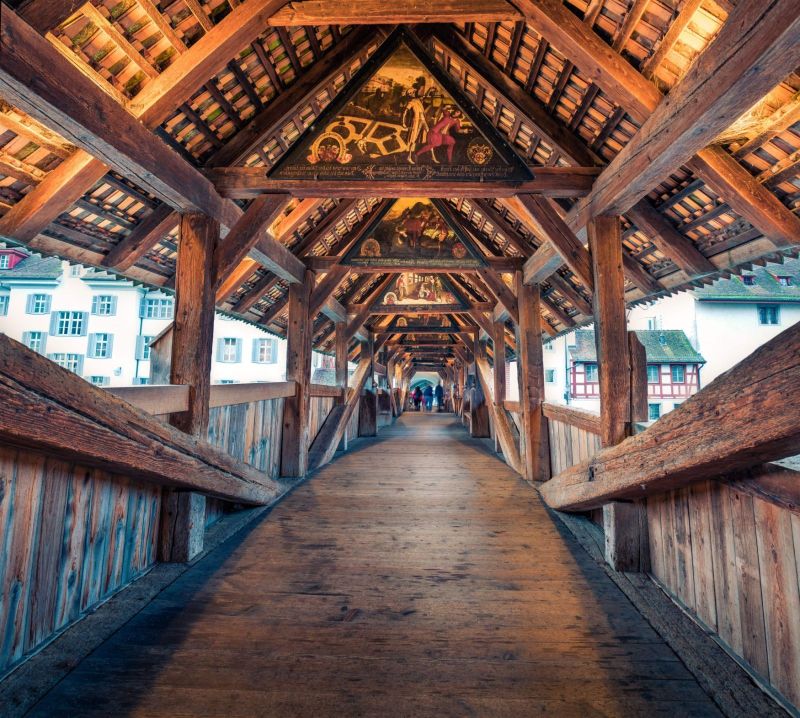
Sixty-seven painted panels above the water, each one a reminder that nobody crosses this river forever.
A circle of painted snow that has not stopped falling since 1881.
A pasta counter near the station where the fillings change by the morning.